The Guest List: When Love Meets Logistics
Because deciding who gets a seat at your wedding is about more than deciding who you love.
There is a particular moment in wedding planning when two people sit down, open a spreadsheet, and discover that apparently, they know everyone.
Everyone.
The childhood friends. The college friends. The coworkers. The cousins you grew up with. The cousins you haven't seen since you were seven. Your parents' closest friends. Their children. The neighbor who watched you grow up.
And, of course, the person who invited you to their wedding eight years ago.
You know. The one you haven't spoken to since.
Suddenly, your intimate celebration for 75 guests has 163 names, three question marks, and a note that says, “Ask Mom.”
Welcome to the guest list.
It's one of the first major planning decisions couples make, and often one of the most underestimated.
Because unlike choosing between two shades of ivory, a guest list involves people, relationships, expectations, and occasionally, a very determined aunt.
But here's something worth remembering:
A guest list isn't a measurement of how much you love someone. It's a reflection of the celebration you're creating.
And creating that list thoughtfully requires both heart and a little mathematics.
Before You Choose a Number, Choose Your People
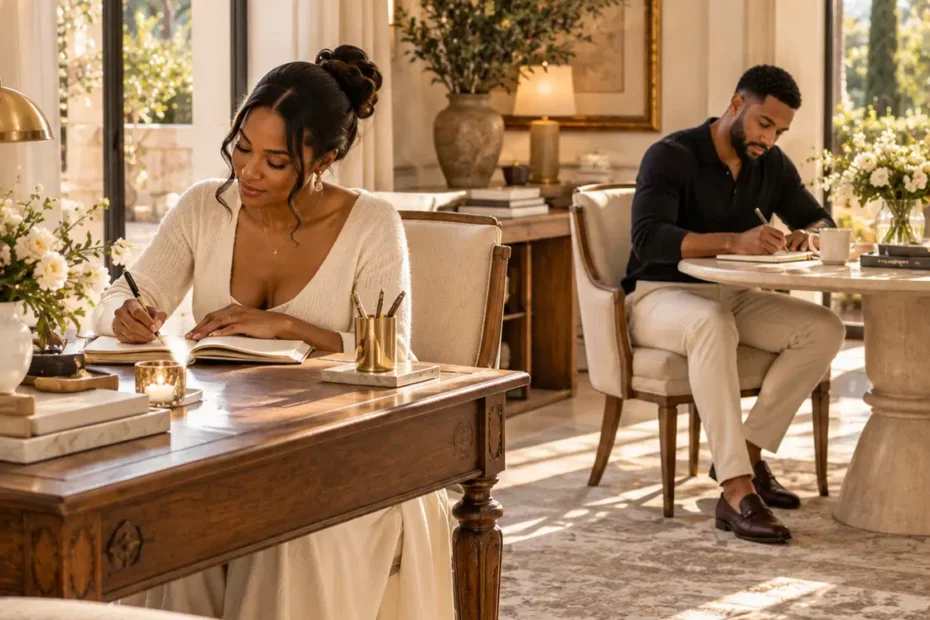
One of the first things I encourage my couples to do is create their guest lists separately.
And no, I don't mean an A-list and a B-list.
We're not ranking people before we've even figured out who's coming.
I mean two completely independent lists.
One for each of you.
Go to your respective corners. Open a spreadsheet, grab a notebook, or use whatever method works best.
But here's the important part:
Don't talk to each other.
Not yet.
Simply write down the names of the people who come to mind when you imagine your wedding day.
Your family. Their family. Your friends. Their friends. Mutual friends. People who've been part of your story.
Don't worry about whose side someone belongs to. Don't worry about how many names you're writing down. And definitely don't start editing your list because you think your partner might have already included someone.
Just write.
No negotiating. No counting chairs. No trying to make the list fit a number you haven't even established.
When you're both finished, come back together.
Now, let's compare.

First, Find the Names You Both Wrote Down
First, Find the Names You Both Wrote Down
Those duplicate names?
They go straight onto your definite guest list.
These are people who independently came to mind for both of you.
There's something lovely about that.
You didn't have to discuss them, negotiate their invitation, or decide whose side they belong to.
You both pictured them there.
Next, Add the People Who Matter Individually
Now look at the names that appear on only one list.
Just because your partner didn't write down your childhood best friend doesn't mean that person is any less important.
And just because you didn't immediately think of their favorite uncle doesn't mean he shouldn't be invited.
This is where you talk.
Explain who matters to you and why. Listen to the people your partner considers essential.
Add those names to your definite list, too.
The goal isn't to invite only the people you agree on. It's to understand the people who matter to each of you.
Now Count
This is the part that changes everything.
Instead of announcing, “We're having a wedding with 50 guests,” and then discovering that you have 170 people you genuinely want there, you've started with the people.
Now you have a realistic starting number.
Maybe it's 65.
Maybe it's 110.
Maybe it's 170.
Whatever the number, it's based on your actual relationships rather than a guest count you chose before you understood what it represented.
And that gives you something far more useful when you begin discussing venues, budgets, and the kind of celebration you want to create.
Then Consider Additional Family Invitations
Once you've consolidated your two lists, you can decide whether you'd like to make room for additional guests suggested by your parents or other family members.
Perhaps your parents have longtime friends they'd love to include. Maybe there are extended family relationships you hadn't considered.
Those names can be discussed separately, with a clear understanding of the space available and the experience you're planning.
But here's the distinction I want couples to remember:
Your core guest list comes first. Additional invitations are considered after you've identified the people who are most important to you.
Of course, the final number may still need to be adjusted based on your budget, venue, and priorities.
But now, if adjustments are necessary, you're making informed decisions.
You're not discovering halfway through planning that the wedding you've envisioned for 50 guests actually needs to accommodate 170.
And you're not beginning the process by asking which people you can eliminate.
You're beginning by recognizing the people you want to celebrate with.
That's a much more meaningful place to start.
Now, What Kind of Wedding Do You Want?
Once you've established your realistic starting number, it's time to talk about the experience you're imagining.
Do you envision a gathering where you can have a meaningful conversation with nearly every guest?
A lively celebration with 150 people, a packed dance floor, and enough energy to keep the party going all night?
A destination wedding where the experience unfolds over several days?
There isn't a correct answer.
But the guest count influences almost every major decision that follows.
The venue. The catering. The rentals. The transportation. The staffing. The layout. Even how much time you'll realistically have with the people attending.
A 60-person wedding and a 160-person wedding can both be beautiful.
They are simply different experiences.
And sometimes, the number you discovered through your guest-list exercise may not match the celebration you originally imagined.
That's okay.
This is where intentional planning begins.
You might decide that including more loved ones matters more than having an intimate dinner.
Or you might discover that a smaller gathering better reflects the experience you want.
The important thing is that you're making those choices with a realistic understanding of your relationships, rather than building your wedding around an arbitrary number.
Every Guest Is More Than a Chair
Here's where the logistics enter the conversation.
Couples often calculate guest counts by looking at catering prices.
If dinner costs a certain amount per person, adding ten guests appears to mean adding ten meals.
Except those ten people may also affect your bar package, rentals, place settings, stationery, favors, staffing, and transportation.
Depending on the venue and layout, additional guests can also mean another table, more chairs, another linen, more centerpieces, and a revised floor plan.
A guest count is not simply a number.
It's a planning variable.
And while adding five guests may be easy in one venue, adding five in another might push the celebration beyond the room's comfortable capacity.
That's why I encourage couples to understand their realistic guest count before falling completely in love with a venue.
Because a beautiful room that technically holds 120 guests may not comfortably accommodate 120 guests alongside your dance floor, band, lounge seating, and everything else you've imagined.
Maximum occupancy and a thoughtfully designed reception are not always the same thing.
We'll explore the broader financial side of wedding planning in another conversation, but for now, remember this:
Every name on your guest list represents a place in the experience you're designing.
Make that place intentional.

The Plus-One Conversation
The Plus-One Conversation
Few guest-list questions generate as much discussion as plus-ones.
Do you give everyone one?
Only married couples?
Only guests in long-term relationships?
What about someone who's traveling alone?
There isn't one universal formula that works for every wedding.
But consistency matters.
Generally, spouses, fiancés, and established partners should be treated as a social unit rather than as optional additions.
An open plus-one, on the other hand, is an invitation for someone to bring a guest of their choosing.
Those are two different situations.
You may decide to extend open plus-ones to guests who won't know anyone else, members of your wedding party, or other guests whose circumstances make that invitation especially considerate.
You may also decide that your venue capacity doesn't allow open plus-ones for every single guest.
Whatever you choose, establish your approach early and apply it thoughtfully.
And please, be specific on your invitations.
An invitation addressed to one person does not automatically include their partner, their cousin, or the friend they're thinking of bringing.
Clarity prevents awkward conversations later.

Children at the Wedding: Decide, Then Communicate
Children at the Wedding: Decide, Then Communicate
Some couples love the idea of children at their wedding.
Others envision an adults-only celebration.
Both choices are valid.
Children can bring extraordinary joy and spontaneity to a wedding. They can also change the logistics of the day, from seating and meals to entertainment and supervision.
If you're inviting children, consider what their experience will look like.
Will they need special meals? Is the venue appropriate for young children? Will there be activities or a designated area for families?
If you're planning an adults-only wedding, communicate that decision clearly and early enough for parents to make arrangements.
Remember that some guests may be unable to attend because of childcare needs.
That's not necessarily a rejection of your celebration.
It's simply a practical reality.
A thoughtful invitation allows people to make informed decisions without guilt.
The Extended Family Equation
Now, let's talk about family size.
One partner may have a close-knit family of twelve.
The other may have a family reunion every time someone goes to the grocery store.
A perfectly equal guest allocation isn't always practical—or necessary.
The goal isn't to divide the room into identical halves.
It's to create an approach that feels fair to both partners.
And this is another reason I like starting with those two independent guest lists.
You've already identified the people who matter most to each of you, without imposing an arbitrary 50/50 split.
Now, if additional family invitations come into the conversation, you have a clear foundation to work from.
Perhaps your parents would love to include a few longtime friends.
Maybe there are extended family relationships that deserve consideration.
Discuss those additions together and establish how many extra invitations your plans can reasonably accommodate.
And if parents are contributing guest suggestions, give them a clear number to work within rather than leaving the invitation count open-ended.
That way, everyone understands the available space.
A wedding guest list is not a family census.
You do not have to account for every branch of the family tree.
The Venue Capacity Reality Check
Here's a conversation I wish more couples had before signing a venue contract:
How many guests can this venue comfortably accommodate with our actual wedding design?
Not simply how many people the venue is legally permitted to hold.
How many can enjoy the celebration you're imagining?
Consider the floor plan.
Will the room still feel inviting with your preferred table arrangement?
Is there sufficient space for servers to move comfortably?
Does the dance floor fit without crowding the dining area?
Are accessibility needs being considered?
What happens when guests leave their seats and begin moving between the bar, lounge, and dance floor?
The answer may be different depending on whether you're using round tables, long banquet tables, or a combination of seating arrangements.
A venue's stated capacity is a starting point, not a substitute for a properly developed floor plan.
And yes, I will always advocate for breathing room.
Beautiful design should enhance the guest experience, not make people navigate an obstacle course to reach the bar.
The RSVP List Is Not the Guest List
Another distinction worth making:
Your invitation list and your final attendance count are not the same thing.
Some guests will decline.
Others may not respond by the deadline.
And occasionally, someone will assume that not responding is somehow a response.
It isn't.
Build a clear RSVP process with a realistic deadline based on your vendors' requirements.
Track responses carefully, including meal selections and any necessary guest information.
Don't assume that a certain percentage of people will decline and use that assumption to invite more guests than your venue can accommodate.
You may be pleasantly surprised by how many people want to celebrate with you.
Which is wonderful.
Unless you now have 132 confirmed guests and 120 chairs.
Plan for the possibility that everyone you invite could accept.
You can create a secondary invitation list, but use it thoughtfully and only when timing and logistics allow.
No one should feel like they received an invitation because someone else couldn't make it.
A Thoughtful Guest List Creates a Better Guest Experience
When couples hear the phrase “guest experience,” they often think about welcome gifts, signature cocktails, or interactive entertainment.
Those details can certainly be lovely.
But guest experience begins much earlier.
It begins with the number of people you're inviting and whether your plans can comfortably accommodate them.
It shows up in thoughtful seating arrangements, clear communication, accessible spaces, and realistic transitions throughout the celebration.
It also shows up in the couple's ability to be present.
If you've invited 200 people but imagined spending meaningful time with every single one of them, you may find those expectations difficult to reconcile.
That doesn't mean you should invite fewer people.
It means your guest count and your expectations should agree with each other.
A larger celebration may call for different opportunities to connect, such as a welcome gathering or an additional event.
An intimate wedding may create more room for individual conversations.
Neither is inherently better.
The right choice is the one that supports the experience you want.
The Guest List Should Feel Like Your Celebration
At some point, you'll have to stop adding names.
Not because you've run out of people you care about.
But because you've created a celebration with a particular purpose, capacity, and atmosphere.
Some people you love won't be there.
Some relationships will be celebrated in other ways.
And some invitations will require more thought than you expected.
That's part of the process.
Your wedding doesn't need to include every person who has ever played a role in your life to honor the life you've built.
What matters is creating a gathering that feels intentional, welcoming, and genuinely connected to the two people getting married.
So start with two lists.
Write down the names without worrying about the numbers.
Come together, compare, and discover the people who matter most to each of you.
Then build a celebration that can welcome them thoughtfully.
And when you're tempted to add one more person because someone says, “But you have to invite them,” remember:
Your guest list is not a measurement of affection. It's a reflection of your priorities.
Choose the people.
Create the experience.
And leave enough room for everyone to actually enjoy it.
Including yourselves.
Thoughtfully planned. Beautifully personal.
A Very Lovely Wedding
Show up. Have fun. Do nothing. We'll handle the rest.