Your Wedding Vendors Don’t Have to Know Each Other. They Do Have to Work Together.
Your photographer has never met your florist.
Your DJ works at your venue all the time, but your caterer has never been there.
Your rental company is coming from another city.
And your planner?
We may be meeting half of these people for the first time too.
That is completely fine.
A great wedding day does not require a vendor team that has worked together twenty times before.
It requires something much more important:
Communication.
Because once wedding day begins, we are no longer a collection of separate businesses hired by the same couple.
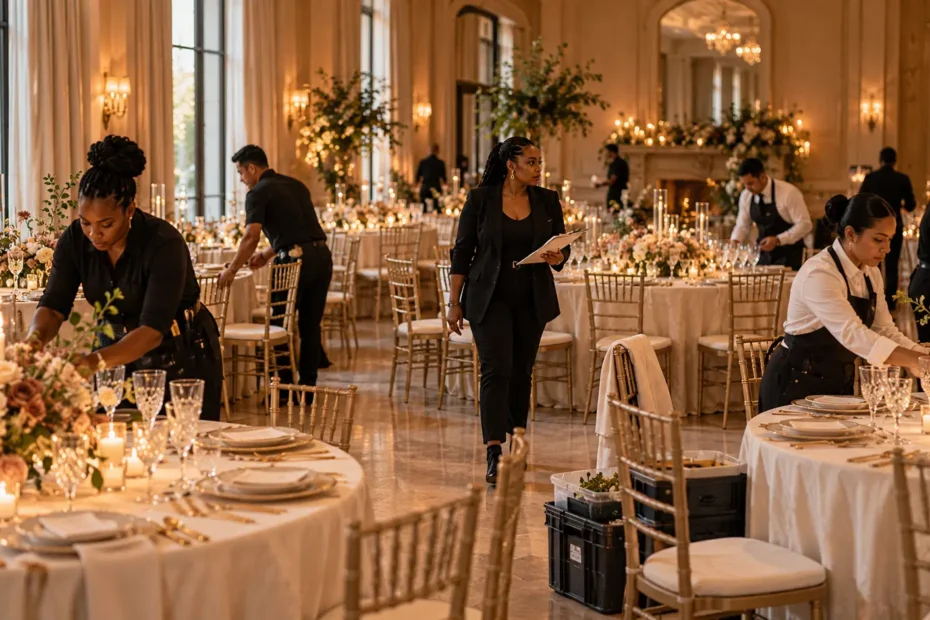
We are one team.
And we have one wedding to take care of.
Everyone Has Their Job. But Nobody Works in a Bubble.
Your photographer is responsible for your photography.
Your florist is responsible for the flowers.
Your DJ is responsible for music and entertainment.
Your caterer is responsible for food and service.
Your rental company is responsible for getting the right things to the right place.
Everyone has their own expertise, responsibilities and way of doing their job.
But here's the thing:
Almost everything one vendor does affects someone else.
The florist needs access to the ceremony space early enough to finish before photography begins.
The photographer needs to know when the bouquet will be ready if we're using it for portraits.
The caterer needs to know when speeches are happening so we're not serving the entrée while Dad is halfway through telling everyone about the time you drove the family car into the mailbox.
The DJ needs to know if dinner is running behind before announcing the first dance.
Transportation needs an accurate departure time because “we'll just leave when we're ready” is a lovely idea until there is a bus full of people waiting outside.
There are a lot of individual jobs happening on a wedding day.
Our job is to make sure they work together.

That's Where Your Coordinator Comes In
On wedding day, your coordinator becomes the operational lead for the vendor team.
That doesn't mean I tell your photographer how to take pictures.
I am not rearranging your florist's flowers.
And absolutely nobody wants me in the catering kitchen pretending I know what I'm doing.
Your vendors are professionals. They know their jobs.
My job is to see the whole wedding.
I know when the photographer needs the couple.
I know when catering needs the room.
I know when the DJ is preparing for introductions.
I know when transportation is expected.
I know what is supposed to happen next—and what else will be affected if it doesn't.
So when something changes, we don't need five vendors making five independent decisions.
We communicate.

Because Something Will Change
I don't say that to scare you.
It's a wedding.
Something will change.
Maybe portraits need another ten minutes.
Maybe Grandma needs a little longer getting from the ceremony to cocktail hour.
Maybe dinner service is running eight minutes behind.
Maybe the weather has decided it would also like to participate in your wedding.
None of those things automatically mean there's a problem.
The problem comes when nobody communicates.
If catering is running behind and the DJ doesn't know, an announcement may happen too early.
If the photographer needs another ten minutes and nobody tells catering, dinner may be sitting when it shouldn't be.
If the ceremony is delayed and transportation doesn't know, now another part of the evening is affected.
One small change can travel surprisingly far.
That's why your coordinator isn't only watching the clock.
We're watching the connections.

We Don't Have to Have Worked Together Before
Couples sometimes worry when their vendors haven't worked together before.
You don't need to.
Professional wedding vendors work with new people all the time.
Your wedding is not a group project where everyone needed to be friends beforehand.
What matters is what happens before we arrive.
Have the vendors received the information they need?
Does everyone know when they're expected?
Do they understand venue access?
Have responsibilities been clarified?
Does everyone have the current timeline?
Do they know who to contact when something changes?
Those conversations are part of the work.
By the time your wedding day arrives, I don't need to know what your DJ orders at Starbucks.
I need to know how to reach them, what they need from me, what I need from them and how their responsibilities fit into the rest of the day.
We don't have to know each other before the wedding. By wedding day, we need to work like we do.
Communication Goes Both Ways
Being one team also means your coordinator needs your vendors to communicate with us.
If something changes, tell me.
If you need more time, tell me.
If you see a potential issue, tell me.
If something we planned isn't going to work the way we expected, definitely tell me.
I would much rather hear, “Hey Nathalie, I need another five minutes,” than discover five minutes later that we're already five minutes behind.
That information gives me something to work with.
And sometimes the answer is simply, “No problem.”
Sometimes I can move something else.
Sometimes I need to tell three other people.
Sometimes we decide together that the timeline stays exactly where it is.
But we can only make good decisions when we're communicating.

Nobody Wins by Protecting Their Own Little Corner
This is one of the things I love about a really good vendor team.
There's no:
That's not my problem.
There's:
What do you need?
The florist notices something and tells the planner.
The photographer gives us a heads-up before taking the couple somewhere.
The catering captain lets us know they're ready.
The DJ checks before making the announcement.
The coordinator keeps everyone informed when the plan shifts.
Nobody has to abandon their role or start doing someone else's job.
We simply understand that we're all contributing to the same experience.
Because the couple doesn't experience the florist separately from the caterer separately from the DJ separately from the photographer.
They experience their wedding.

One Wedding. One Team.
Your vendors do not need matching personalities.
They don't need to be on the same preferred-vendor list.
They don't need to follow each other on Instagram.
They don't even need to have met before that morning.
They need professionalism.
They need clear expectations.
They need communication.
And on wedding day, they need someone looking at the entire picture and keeping all those individual pieces moving in the same direction.
That's what coordination is.
Not standing in the corner holding a clipboard.
Not simply checking things off a timeline.
It's leadership.
It's communication.
It's knowing when to step in, when to adjust, when to ask a question and when to let a professional do exactly what they were hired to do.
By the time your wedding begins, there shouldn't be six separate vendors trying to produce six separate pieces of a wedding.
There should be one team producing your wedding.
And whether we've worked together for ten years or met each other ten minutes ago, that's the mindset:
We are one team.

A Very Lovely Wedding