You Don’t Have to Include Every Wedding Tradition
There is a very specific moment in wedding planning when someone says:
“Wait… are we supposed to do that?”
And I already know where this is going.
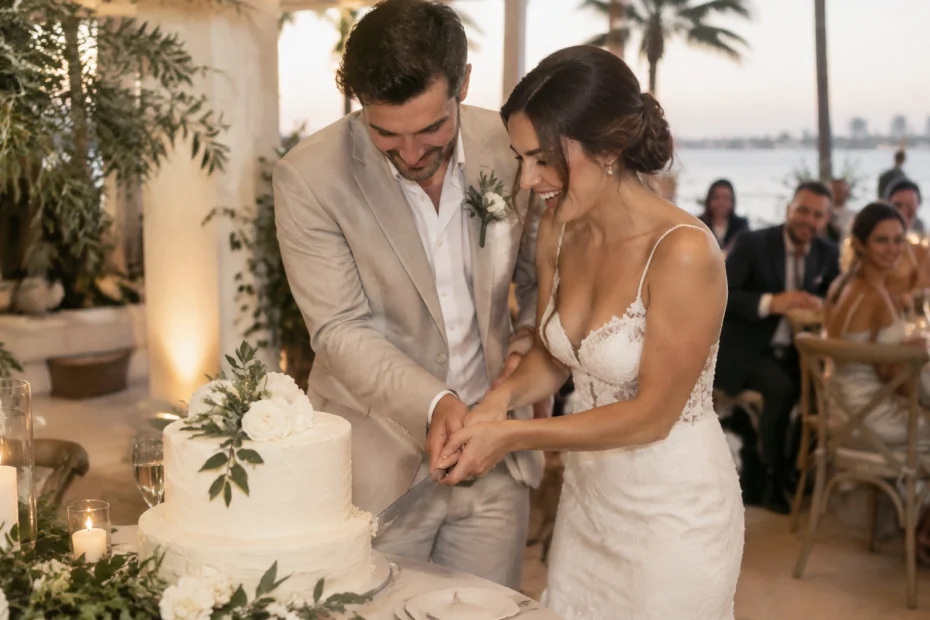
Cake cutting.
Bouquet toss.
Parent dances.
Wedding party entrances.
Favors.
Guest book.
First dance.
Formal exit.
Somebody has discovered another thing weddings apparently have, and now we're trying to figure out whether we actually want it.
So here's the good news:
You don't have to do something just because it's a wedding thing.
Really.
The Wedding Police are not coming.
Tradition Is an Invitation, Not an Assignment
Wedding traditions exist for a reason.
Some are cultural.
Some are religious.
Some have been passed through families for generations.
Some are simply traditions we've seen at so many weddings that they now feel mandatory.
But they're not all the same.
And they're definitely not all required.
The better question isn't:
“Are we supposed to do this?”
It's:
“Does this mean something to us?”
If the answer is yes, wonderful.
Keep it.
If the answer is kind of, but we'd do it differently, also wonderful.
Change it.
And if the answer is:
“Honestly? Neither of us cares.”
There you go.
You Can Keep the Traditions You Love

Tradition can be incredibly beautiful when there's a reason you want it there.
Maybe your parents danced at their wedding and you've imagined having that same moment with them.
Maybe cutting the cake feels nostalgic and celebratory to you.
Maybe your family has a ceremony tradition that has been passed down for generations.
Maybe you genuinely love the idea of tossing your bouquet.
Then please do it.
You don't need to remove traditions just to make your wedding feel modern or different.
Personal doesn't automatically mean unconventional.
Sometimes the most personal choice you can make is keeping something people in your family have done before you.
The point is that you chose it.
You Can Change the Traditions That Almost Fit

This is where it gets fun.
Sometimes you like the idea behind a tradition, but the traditional version doesn't quite sound like you.
So change it.
Maybe you want a first dance, but you don't want four minutes of everyone staring at you.
Dance for a minute, invite everyone else onto the floor and suddenly we're partying.
Maybe you want to honor your parents but don't want separate formal parent dances.
Choose one song and bring everyone out together.
Maybe you love the symbolism of cutting the cake but couldn't care less about having a towering wedding cake.
Cut a small one.
Maybe you want your wedding party introduced, but the thought of making your friends choreograph entrances gives you secondhand embarrassment.
They can simply walk in.
I promise.
Nobody needs to pretend they're entering the NBA Finals.
A tradition can still mean something even after you've changed the way it's done.
And Yes, You Can Skip It Completely

You don't want a bouquet toss?
Skip it.
You don't want favors?
Skip them.
You don't want a guest book?
Skip it.
You don't want a cake cutting announcement?
Don't make one.
You don't want a formal exit at the end of the night because you'd rather still be on the dance floor with everyone else?
Please stay on the dance floor.
Your guests are not sitting at their tables with little wedding-tradition scorecards.
Cake cutting: check.
Bouquet toss: check.
Guest book: check.
They came to celebrate you.
If the night feels good, they're probably not wondering where the garter toss went.
And if they are?
They'll recover.
“But Our Families Expect It”
Ah.
There it is.
Because sometimes the tradition isn't important to the couple.
It's important to someone who loves the couple.
And that deserves a little more consideration than simply saying, “It's our wedding, we're doing whatever we want.”
Maybe your mother has imagined your parent dance since you were little.
Maybe a ceremony tradition matters deeply to your grandparents.
Maybe something that feels optional to you carries cultural or religious significance for your family.
That doesn't automatically mean you have to include it.
But it might mean it's worth understanding why it matters to them before deciding.
Sometimes you hear the story and think:
Oh. I didn't know that.
And suddenly the tradition means something to you too.
Other times, you understand it completely and still decide it isn't right for your wedding.
Both can be true.
Culture and Religion Deserve More Than a Quick Yes or No

Some traditions aren't simply wedding activities.
They carry history.
Faith.
Family identity.
Cultural meaning.
Those deserve to be approached with curiosity rather than treated like another item on the timeline.
If you're combining cultures, religions or family traditions, you also don't have to force everything into one perfectly blended wedding language.
One tradition can belong to one family.
Another can belong to the other.
Some can be shared.
Some can remain distinct.
And some may not make it into the wedding at all.
The goal isn't to fit every tradition into one day.
It's to understand what you're choosing and why.
Your Timeline Does Not Need Every Wedding Moment
There is also a very practical reason to be selective.
Every tradition takes time.
Five minutes here.
Ten minutes there.
A transition.
An announcement.
Getting the right people into the right place.
Getting them back out again.
And suddenly your reception has become a beautifully dressed obstacle course.
Entrance.
First dance.
Parent dance.
Welcome.
Blessing.
Dinner.
Speeches.
Cake cutting.
Bouquet toss.
Another announcement.
Another transition.
Meanwhile, your guests are wondering when they can just dance.
You don't need to remove meaningful moments to create a good timeline.
But every moment should earn its place.
Because when you say yes to one thing, you're also giving it a piece of the evening.
Don't Replace One Set of Rules With Another
There is a funny thing happening in weddings right now.
Couples are sometimes told that traditional weddings are outdated and that a wedding has to be unconventional to feel personal.
No.
We're not replacing:
“You have to do this because it's tradition.”
with:
“You can't do this because it's traditional.”
That's the same problem wearing different shoes.
Have the receiving line if you want one.
Wear white if you want to.
Cut the cake.
Throw the bouquet.
Have the big wedding party.
Dance with your father.
Do all of it.
Or do none of it.
The goal isn't to avoid tradition.
The goal is to stop confusing tradition with obligation.
Before You Put It on the Timeline
For every tradition you're considering, ask:
Does this mean something to us?
Would we miss it if it weren't there?
Are we doing it because we want to—or because we think we're supposed to?
Does it matter to someone we love, and do we understand why?
Is there a version of this that would feel more like us?
Those questions will tell you far more than any wedding checklist ever could.
Because the checklist doesn't know your family.
It doesn't know your cultures.
It doesn't know your relationship.
And it definitely doesn't know whether you actually want to throw your bouquet across a room.
Keep It. Change It. Skip It.

That's really it.
Keep the traditions that mean something.
Change the ones that almost fit.
Skip the ones you don't care about.
There is no prize for completing the most wedding traditions before midnight.
There is only the celebration you're creating.
And it should have room for the moments that actually matter to you.
Tradition is beautiful when it means something.
Obligation is just another item on the timeline.
A Very Lovely Wedding