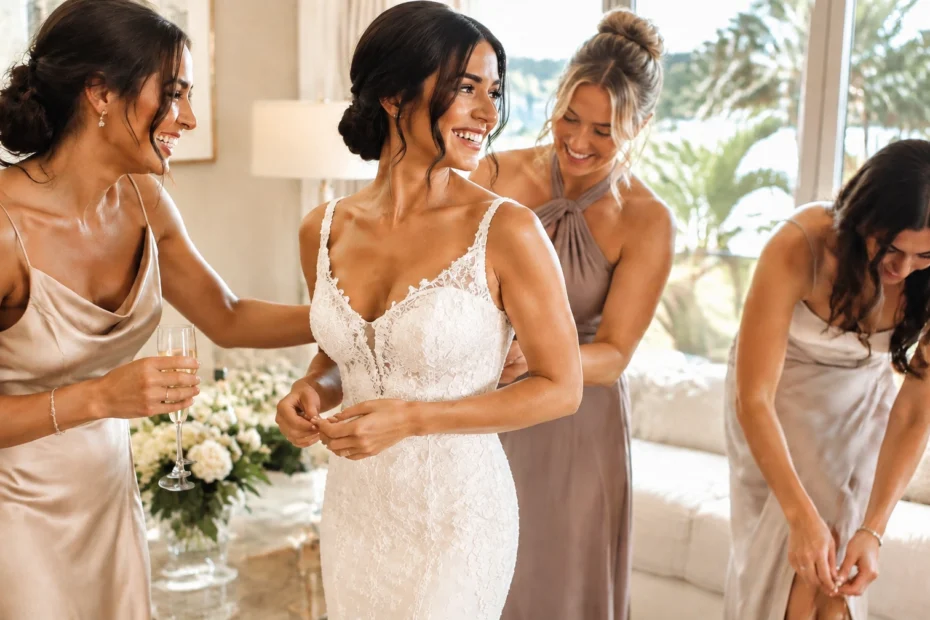
Your Wedding Party Is Made of People, Not Employees
There is a moment in wedding planning when the people you love most somehow acquire job descriptions they never applied for.
Your maid of honor is now apparently in charge of keeping everyone on schedule.
A bridesmaid is steaming dresses.
The best man has been handed transportation logistics.
Someone's sister is supposed to make sure the florist knows where to go.
And your cousin?
Nobody knows exactly what she's responsible for, but she has the emergency kit, three vendor phone numbers and somebody's grandmother's purse.
At some point, we should probably ask:
When did your wedding party become the staff?
Your wedding party is there because these are the people you want beside you for one of the biggest moments of your life.
Let them be there.
Being in a Wedding Already Comes With Responsibilities
Let's be fair.
Agreeing to be in someone's wedding does usually mean agreeing to a few things.
There may be attire to purchase.
There may be a rehearsal.
There may be photographs.
There may be a ceremony entrance to remember.
There may be a toast.
There may be pre-wedding celebrations.
And yes, there will probably be a group chat that refuses to die.
That's part of it.
But there is a difference between participating in the wedding and working the wedding.
Your wedding party should know where they need to be, when they need to be there and what is expected of them.
They shouldn't need a production schedule.
Asking Is Different From Assigning
There is nothing wrong with asking someone you love for help.
Your sister may genuinely enjoy putting together welcome bags.
Your best friend might be thrilled to help you choose accessories.
Your cousin may have been waiting her entire life for someone to ask her to organize a bridal shower.
People like being involved.
The important word is ask.
Not:
“By the way, you're picking up the cake Saturday morning.”
Ask.
Give them the opportunity to say yes.
And give them enough information to understand what yes means.
A five-minute favor and a three-hour errand are not the same request.
Neither are “Can you bring this with you?” and “Can you be responsible for this all day?”
Clear expectations are kind.
Consider What You're Already Asking of Them
Being part of a wedding can be expensive.
Travel.
Hotels.
Attire.
Alterations.
Hair and makeup.
Pre-wedding events.
Time away from work.
Childcare.
Meals.
Transportation.
None of those things may feel enormous individually, but together they can become a significant commitment.
So before adding another responsibility, consider what that person is already giving.
This doesn't mean you can never ask your wedding party to help.
It means their time, money and energy deserve the same consideration you would want someone to give yours.
You chose these people because you love them.
Plan accordingly.
Your Wedding Party Should Not Be Managing Your Vendors
This is where I become a little less flexible.
Your bridesmaid should not be answering florist questions while she's getting her makeup done.
The best man should not be calling the transportation company because the shuttle hasn't arrived.
Your maid of honor should not be trying to locate the photographer while simultaneously helping you into your dress.
And nobody in formalwear should suddenly discover that they're responsible for explaining the reception setup to a rental company.
Your vendors need a point of contact.
Preferably one who is not also supposed to be standing in your ceremony.
There are situations where a family member or wedding-party member needs to provide information, hand something over or answer a personal question.
That's normal.
Managing vendors is different.
That's work.

Please Let Them Get Ready
Wedding mornings have a funny way of making people look available.
Everyone is in one room.
People are talking.
Music is playing.
Someone has snacks.
Surely somebody can just run downstairs really quickly.
Except the person you send downstairs may be halfway through hair.
Or hasn't gotten dressed.
Or is supposed to be in photos in twenty minutes.
Or went downstairs for “one quick thing” and has now been missing for forty-five minutes because three other people stopped her along the way.
Getting ready is part of the timeline.
Your wedding party needs time to shower, eat, dress, have hair and makeup completed, gather their belongings and be ready for photographs.
They aren't standing around waiting for assignments.
Even when it looks like they are.
The End of the Night Is Where Things Get Interesting
The ceremony happened.
Dinner was wonderful.
Everybody danced.
You're married.
And suddenly there are 63 candles, a card box, two framed signs, leftover cake, your guest book, six personal décor items and a pair of shoes somebody abandoned under Table 8.
Who is taking all of this home?
If the answer is:
“We'll figure it out,”
I would like to gently suggest that we figure it out now.
End-of-night responsibilities are some of the easiest things to overlook because nobody wants to think about cleanup while planning the pretty parts.
But somebody needs to know what belongs to the couple.
What belongs to the florist.
What belongs to the rental company.
What goes back to the hotel.
What goes into someone's car.
What absolutely cannot be left behind.
If a family member or wedding-party member is taking something, tell them ahead of time.
Do not introduce them to their new candle collection at 11:04 PM.

Your Maid of Honor Is Not the Default Person
This deserves its own section.
Somehow, “maid of honor” can slowly become shorthand for:
Person Responsible for Anything We Forgot to Assign.
No.
She may hold your bouquet.
She may bustle your dress.
She may give a toast.
She may help you calm your nerves.
She may be the person who knows exactly what to say when you suddenly decide five minutes before the ceremony that you have forgotten how walking works.
Those are the things that make her role personal.
She shouldn't spend your wedding day solving operational problems simply because she's reliable.
If your maid of honor needs a clipboard, a headset and a vendor contact sheet, congratulations.
You have accidentally hired her.
Give People Specific Jobs, Not General Responsibility
Sometimes you genuinely do need help from friends or family.
Make the responsibility specific.
“Please take our card box to your car after the reception.”
Great.
“Can you make sure everything gets taken care of at the end of the night?”
Not great.
“Please bring the marriage license to the ceremony and hand it to our planner.”
Perfect.
“Can you keep track of all the important stuff?”
Absolutely not.
Specific responsibilities are easier to remember, easier to communicate and much less likely to grow into something nobody agreed to.
One person.
One task.
Clear instructions.
Done.

Let Your People Be Your People
There is another reason I care about this.
Your wedding party is part of your wedding memories.
These are the people who will be standing beside you in photographs.
Laughing with you while you get ready.
Watching you say your vows.
Giving the speeches that make you cry.
Dragging you onto the dance floor.
Remembering things about the day that you completely missed.
They deserve to experience it too.
Your sister shouldn't remember your ceremony as the time she was texting the caterer.
Your best friend shouldn't miss cocktail hour because he's trying to figure out where the shuttle went.
Your maid of honor shouldn't spend dinner wondering whether the cake knife arrived.
Let them be present.
That's why they're there.
From Nathalie's Notebook
I love a helpful wedding party.
Truly.
Give me the bridesmaid who asks what she can carry.
Give me the best man who makes sure everybody knows where they're supposed to be.
Give me the sister who has snacks.
These people are wonderful.
But being helpful and being responsible for the operation of the wedding are two very different things.
A well-managed wedding shouldn't depend on how good your friends are at putting out fires.
It should have a plan.
Your people can help.
They just shouldn't have to run it.

They Came to Celebrate You
Your wedding party accepted a special place in your wedding because they have a special place in your life.
That's the job.
Stand beside you.
Celebrate with you.
Laugh with you.
Cry with you.
Take the photographs.
Give the toast.
Dance badly.
Dance extremely confidently while dancing badly.
Be there.
The logistics should be intentionally assigned to the people responsible for handling them.
Because your bridesmaid is not the florist.
Your best man is not the transportation department.
Your maid of honor is not the coordinator.
And your cousin does not need to spend the night wondering why she is suddenly responsible for an extension cord.
Let your people be your people.
Let your vendors do their jobs.
And let everybody enjoy the wedding.
A Very Lovely Wedding