Your Wedding Isn’t One Event. It’s a Series of Transitions.
There are moments at a wedding everyone remembers.
The walk down the aisle.
The first dance.
Dinner with the people you love.
That point in the night when somebody’s shoes come off and the dance floor officially becomes everybody’s business.
But there’s another part of the wedding that rarely makes the photo album.
Getting everyone from one of those moments to the next.
And when it’s done well?
Nobody notices.
That’s exactly the point.
The Moments Between the Moments Matter
A wedding isn’t really one event.
It’s a collection of experiences connected together:
Ceremony → Cocktail Hour → Reception → Dinner → Party
Each one has its own atmosphere, purpose, vendors, timing, and logistics.
But your guests don’t experience them as separate items on a timeline. They experience one wedding day.
They shouldn’t have to stop and wonder:
Are we supposed to go somewhere?
Is cocktail hour starting?
Can we sit down yet?
Are they serving dinner?
Should we be on the dance floor?
And my personal favorite:
Everybody else is walking that way, so I guess we are too.
Because nothing moves a group of wedding guests quite like one confident person who may or may not know where they're going.
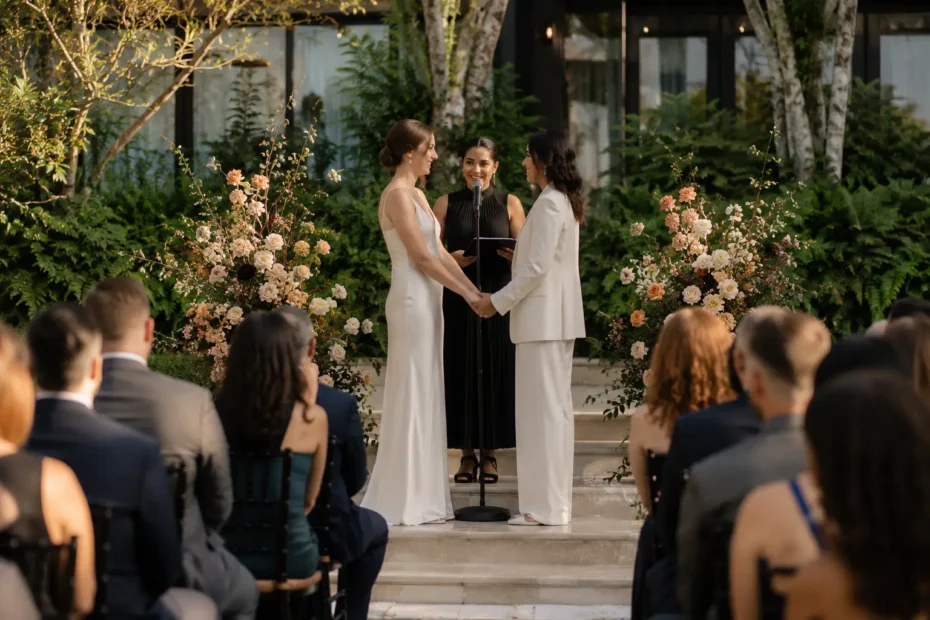
Ceremony → Cocktail Hour

The ceremony ends.
You’re married.
Everyone is happy, hugging, taking pictures and probably looking for a drink.
Meanwhile, behind the scenes, quite a bit is happening.
The couple and wedding party may need to stay behind for portraits. Ceremony items may need to be moved. The bar needs to be ready. Passed hors d'oeuvres need to begin. Musicians or entertainment may be transitioning. The reception space may still be receiving final touches.
And your guests?
They simply need to know where to go.
A good transition doesn't require a five-minute explanation. It requires the next experience to feel ready when the previous one ends.
Cocktail Hour → Reception
This is one of the biggest transitions of the wedding day because now we're moving an entire group of people.
And people are comfortable.
They have drinks. They're talking. They've found the cousin they haven't seen in six years. Someone has started telling a story that absolutely cannot be interrupted.
Now we need them all inside.
This is where timing, communication and coordination matter.
The reception space needs to be ready before guests are invited in. The catering team needs to be positioned. Entertainment needs to know what's coming. Key family members and the wedding party need to be where they're supposed to be.
Then the doors open.
Guests find their seats.
And the next part of the wedding begins.
No chaos required.
Reception Entrance → First Dance

There are dozens of ways to structure a reception, and there is no single sequence every wedding needs to follow.
But whatever sequence you choose should make sense for your celebration.
If you're moving directly from introductions into your first dance, that transition should feel intentional—not like somebody suddenly remembered:
“Oh! They're supposed to dance now.”
The DJ or band, photographer, videographer, planner and couple all need to be ready for the same moment.
Because there is a very big difference between something being written on a timeline and something actually being ready to happen.
First Dance → Dinner

Here's where I will happily advocate for one of my favorite wedding activities:
Feeding people.
Your guests have gotten dressed, traveled, attended your ceremony, enjoyed cocktail hour and celebrated your entrance.
At some point, we should probably give them dinner.
But even dinner has a flow.
When are tables released? Is service plated, buffet, stations or family-style? Are speeches happening before dinner, during courses or afterward? When are the couple and wedding party eating? Does the photographer need the couple for sunset portraits?
A strong timeline considers all of it.
Not because your wedding needs to run like a military operation.
Quite the opposite.
We organize the logistics so the celebration doesn't feel like one.
Dinner → Party
And then something changes.
The formalities are mostly finished.
The lights may dim.
The music changes.
Jackets come off.
Shoes become increasingly optional.
This transition is less about moving guests physically and more about changing the energy of the room.
You don't want dinner to simply end and leave everyone wondering what happens now.
Maybe the dance floor opens with a parent dance. Maybe the DJ changes the music. Maybe the couple gets everyone onto the floor. Maybe there's a cultural tradition, surprise performance or late-night moment that signals:
Okay. We're partying now.
The best version is the one that feels natural for your people.
A Timeline Should Create Freedom, Not Control It
Sometimes couples hear the word timeline and imagine their wedding being scheduled down to the second.
That's not what a good wedding timeline is supposed to do.
The timeline isn't there to control the celebration.
It's there to protect it.
It gives your vendors a shared plan. It anticipates what needs to happen before guests ever know it needs to happen. And it gives us enough structure to adjust when real life inevitably enters the chat.
Because weddings involve people.
People take longer to finish conversations.
Bustles occasionally fight back.
Someone disappears exactly when family photos begin.
Dinner service can take longer than expected.
And sometimes the dance floor is having such a good moment that the last thing I want to do is interrupt it because a piece of paper says something else should happen at 9:17.
A strong timeline gives us the framework to make those decisions intelligently.
Your Guests Should Feel the Wedding, Not the Logistics
Your guests don't need to know that the photographer was given a five-minute warning.
They don't need to know the catering captain and planner adjusted dinner service.
They don't need to know the DJ was told to hold an announcement for three minutes.
They don't need to know that someone quietly found Uncle Whoever because he was supposed to give the next toast.
They should simply feel like the evening keeps moving.
One moment ends.
The next one begins.
And somehow, they always seem to know where they're supposed to be.
That isn't an accident.
That's planning.
And if we've done our job well, you probably won't notice most of it either.
You can just show up, have fun, and get married.
We'll worry about getting everybody else where they're supposed to go.
