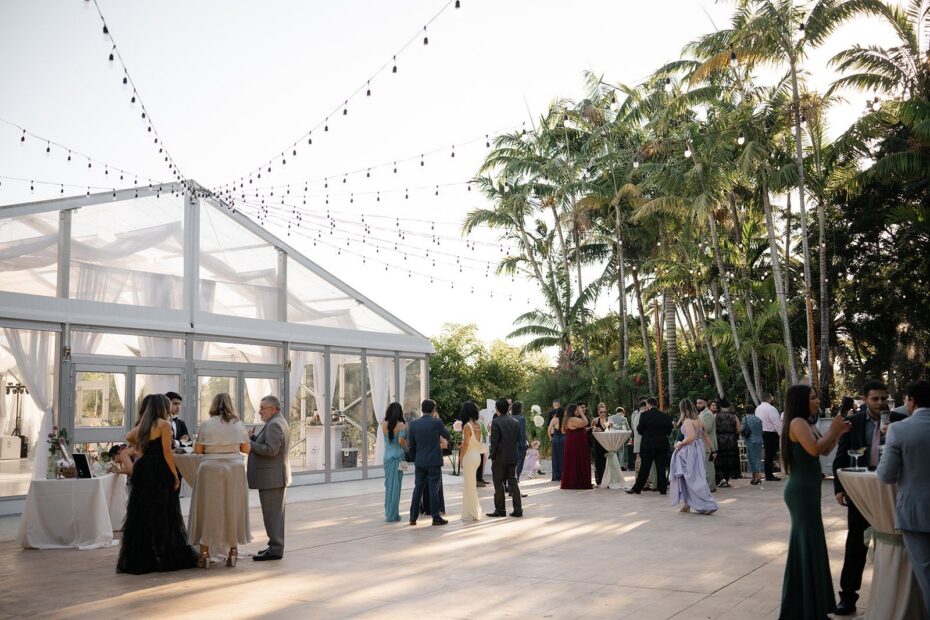
Your Guests Don’t Know Your Timeline
And they shouldn’t have to.
You know what time cocktail hour starts.
You know dinner is scheduled for 7:15.
You know the room needs to be flipped before guests come back inside, the photographer is stealing you away for ten minutes at sunset, and your DJ has exactly three minutes to get everyone’s attention before introductions.
Your guests?
They know they were told to arrive at 4:30.
That’s about it.
And that is exactly how it should be.
Your guests shouldn’t need your wedding timeline to understand what’s happening. They shouldn’t have to find a bridesmaid to ask where cocktail hour is, wonder whether they’re supposed to sit down yet, or start whispering, “Are we eating soon?”
A well-planned wedding quietly answers those questions for them.
That’s part of the guest experience, too.
Confusion Feels Longer Than It Is
Ten minutes enjoying a cocktail with friends? Nothing.
Ten minutes standing in a hallway wondering whether you’re in the right place?
Approximately three business days.
When guests know what’s happening—or can naturally figure it out—they relax.
That doesn’t mean you need signs explaining every movement of the day.
Sometimes it’s a coordinator opening the doors at the right moment.
A DJ making a clear announcement.
Cocktail tables positioned where people naturally gather.
A server offering a drink as guests enter.
The next space being ready before guests are asked to move into it.
Good flow rarely screams, LOOK HOW ORGANIZED THIS WEDDING IS.
It simply feels easy.
Transitions Matter More Than You Think
Ceremony to cocktail hour.
Cocktail hour to reception.
Dinner to dancing.
Those little spaces between the big moments are where weddings can start to feel disjointed.
Think about the end of your ceremony.
You two walk back down the aisle. Everyone cheers. Beautiful.
Now what?
If guests have no idea where to go next, that gorgeous moment can quickly become 100 people standing around looking at one another.
Someone eventually starts walking.
Everyone assumes that person knows something.
They probably don't. 😂
And suddenly your Uncle Robert has accidentally become the cocktail-hour coordinator.
This is why transitions are planned—not just events.

Your Timeline Should Account for Humans
A timeline can look perfect on paper and still not work particularly well for actual people.
Because humans need time.
Grandma may not move from the ceremony to cocktail hour as quickly as your wedding party.
One hundred guests cannot magically find their escort cards, locate their tables and sit down in two minutes.
The restroom will inevitably become very popular exactly when you want everyone seated.
Someone will stop the two of you for a hug.
Someone else hasn't seen Cousin Lisa in seven years.
And yes, people will finish their conversations before moving to the next space.
We plan for that.
A thoughtful timeline includes breathing room for the way people actually behave—not just the way a spreadsheet wishes they would.

Please Don’t Make Your Guests Wait for You
There will be moments when you need to disappear.
Portraits. A dress change. A private moment together. Sunset photographs.
Take them.
Your wedding day shouldn't revolve entirely around entertaining everyone else.
But while you're gone, your guests should have somewhere comfortable to be and something to do.
Cocktails and hors d'oeuvres.
Music.
Conversation.
A beautiful outdoor space.
A lounge.
An interactive experience.
It doesn't have to be elaborate.
It simply needs to feel intentional.
There's a difference between guests enjoying themselves while they wait and guests realizing they are waiting.
That difference is planning.
You Don’t Need to Announce Everything
There is such a thing as too much information.
Your guests don't need:
“Ladies and gentlemen, in approximately seven minutes we're going to ask you to begin making your way toward the ballroom, where you'll locate your assigned seat…”
Please don't.
Clear communication doesn't mean constant communication.
Your planner, venue team, DJ or MC can guide guests at the moments when guidance is actually necessary.
The rest should happen naturally.
Doors open.
Music shifts.
Servers move.
People are welcomed into the next space.
Guests follow.
That quiet choreography is one of my favorite parts of a well-run wedding.
When we've done our job correctly, most people don't even notice it happened.

Build the Timeline Backward From the Experience
When I build a wedding timeline, I'm not only asking:
What needs to happen next?
I'm also asking:
What are the guests doing while this happens?
That second question changes things.
If you're taking portraits, where are your guests?
If we're flipping a space, where are your guests?
If dinner isn't ready yet, what are your guests experiencing?
If the reception ends at 11:00, what needs to happen at 10:45 so the evening doesn't suddenly feel like someone turned the lights on and yelled, “Okay, everybody out!”?
A timeline isn't simply a schedule.
It's the invisible structure underneath the experience.
The Best Timeline Is the One Your Guests Never See
Your guests don't need to know that cocktail hour ran three minutes long.
They don't need to know we moved the toast because dinner service was ready early.
They definitely don't need to know that something happened twenty minutes ago that required five vendors, three phone calls and a very calm planner face.
They should be enjoying your wedding.
That's the goal.
The timeline belongs behind the scenes.
The experience belongs in front of them.
So yes, we will plan the minutes.
We will coordinate the vendors.
We will think about transitions and traffic flow and dinner service and all the tiny logistics you probably never imagined would require this much thought.
Your guests?
They can have another cocktail.
We've got it.
Everything will be exactly awesome.

— A Very Lovely Wedding